Giving Structure to Interviews: Why Standardization Matters for Better Hiring Outcomes
Giving Structure to Interviews: Why Standardization Matters for Better Hiring Outcomes
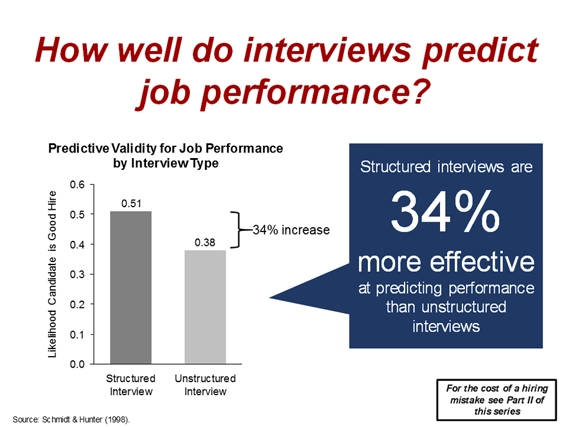
In the high-stakes world of executive hiring, first impressions can be deceiving. While it may feel natural to rely on your gut instinct and form an overall impression of a candidate, research reveals a more effective approach: structured interviews with preset questions are up to twice as effective at predicting job performance than their unstructured counterparts.

The science behind this advantage is compelling. Unstructured interviews lack standardization, creating an environment where cognitive biases can flourish unchecked. Studies by Frank Bernieri at the University of Toledo have demonstrated a particularly troubling phenomenon: interviewers without set questions tend to form an opinion about candidates within the first 10 to 15 seconds of meeting them. In one landmark study, Bernieri's research team showed observers just 15 seconds of videotaped interview footage—the moment when candidates knocked on the door, walked in, and shook hands with the interviewer. Remarkably, these brief glimpses allowed observers to significantly predict the outcome of full 20-minute interviews on nine out of 11 evaluated traits. Rather than objectively evaluating candidates, interviewers unconsciously spend the rest of their time confirming their initial snap judgment.
This bias problem gets expensive fast, especially when hiring executives. According to research cited by SHRM, a bad hire costs approximately $15,000—and that figure doesn't account for the strategic damage that can result from poor leadership hires. When filling C-suite or VP-level roles, gut feelings are a luxury organizations can't afford.
Structured interviews offer a practical solution. They establish a consistent framework that keeps interviewers focused on job-relevant criteria rather than subjective impressions. Google's internal research found that teams using structured interviews with standardized questions and evaluation rubrics saw remarkable improvements: interviewers saved an average of 40 minutes per interview, felt more prepared, and—most importantly—made hiring decisions that were more predictive of actual job performance. Even rejected candidates reported 35% higher satisfaction when they experienced a structured interview process.
The numbers tell the story. According to Schmidt and Hunter's landmark 1998 meta-analysis published in Psychological Bulletin, which synthesized 85 years of personnel selection research, structured interviews achieve validity coefficients of .51 compared to .38 for unstructured interviews when predicting job performance. This means structured interviews are significantly more effective at identifying candidates who will succeed. By preparing specific questions in advance based on thorough job analysis and using standardized evaluation criteria, hiring teams can compare candidates objectively and make decisions based on demonstrated competencies rather than whether someone gave a firm handshake.
For organizations building high-performing leadership teams, the path forward is straightforward: invest the time upfront to develop structured interview protocols. As research published by the American Psychological Association demonstrates, structured interviews rank among the top procedures for predicting job performance, tied with cognitive assessments as the second-best predictor after work sample tests.
In sum, structured interviews reduce bias, improve legal defensibility, save time, and (most importantly) help you identify the candidates who will truly succeed in the role. In an era where talent is the ultimate competitive advantage, can your organization afford to rely on gut feelings?
Evan Metzger is a Project Manager at ECA Partners. He can be reached at [email protected].
Have a role you'd like to discuss?
Looking to expand your team?
Expertise
Insights
Commentary & Thought Leadership
Evidence Based RecruitingCase StudiesBlogBeyond Consulting PodcastNot So Private Equity Podcast